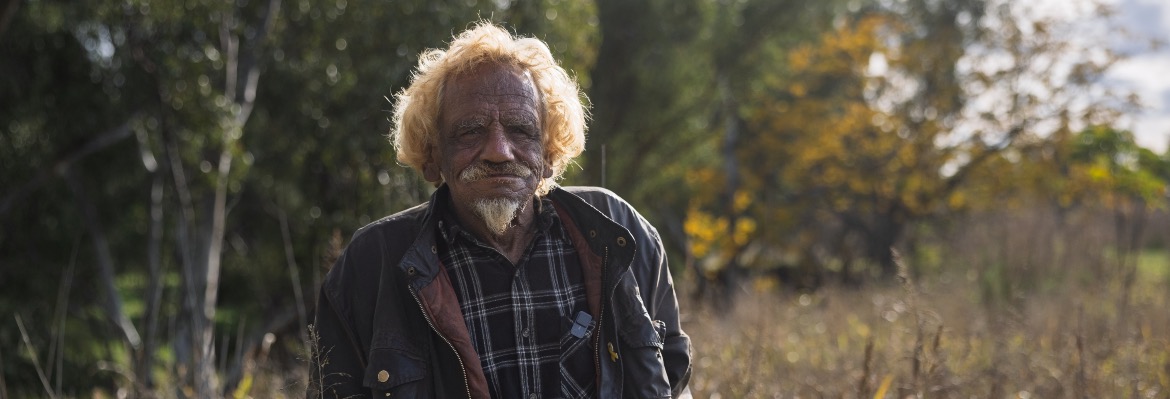
Restoring the Years: Frank’s Journey Back to Faith
Restoring the Years, a Poem by
Riverbank Frank
Sitting on the banks of the Macquarie River in Dubbo, Frank Dolan is known by many as “Riverbank Frank.”
A proud Aboriginal man from the central west of New South Wales, Frank has spent much of his life reflecting on faith, community and what it means to walk with God. Today, his story is one of restoration—a testimony to God’s faithfulness through life’s challenges.
Growing up with Faith
Frank was born into a Christian family where faith was woven into everyday life.
“My parents, who were good people, taught me that we were all created equal in the sight of God,” he recalls.
Yet growing up as an Aboriginal man in regional New South Wales during the 1960s and 1970s, Frank witnessed racism firsthand. As social and political change swept across Australia, he wrestled with difficult questions about identity, justice and belonging.
For a time, those struggles led him away from the faith of his childhood.
“I had my rebellion,” Frank says. “Part of that rebellion was turning away from the place that I had been taught by my father and my mother.”
Searching for answers, he left country and moved to Sydney, immersing himself in political activism and the Aboriginal movement of the day. But despite the passion and purpose he found there, something was still missing.
“I lived a life in limbo, really,” he reflects.
A Return to God
At one of the lowest points in his life, Frank found himself remembering the truths he had learned as a child.
“I realised what it was that I had been taught,” he says. “And I came back to faith.”
Returning to Dubbo, where his family had settled, Frank spent years quietly reflecting on his life and experiences. Much of that time was spent on the riverbank, a place that became both a refuge and a sanctuary.
When friends encouraged him to return to church, he was hesitant.
“I told him to look around him—I was already in church, being on the riverbank,” Frank laughs.
But eventually he accepted the invitation.
“I kept going anyway, and eventually it became a part of me.”
Today, church remains an important part of Frank’s life, but he believes faith is about far more than attending services or quoting Bible verses.
Talking Jesus by Living Jesus
Over the years, Frank has become convinced that many people need more than words—they need to experience genuine love, care and compassion.
“People just need to know that somebody cares,” he says. “That they matter to people.”
Rather than preaching loudly, Frank believes Christians are called to demonstrate Christ through the way they live.
“I think what’s needed is to talk Jesus by living Jesus.”
Whether it’s greeting a stranger, showing kindness to someone who feels forgotten, or simply taking time to listen, Frank sees these everyday moments as opportunities to reflect Christ’s love.
Living on the riverbank with very little, Frank has also discovered that true contentment cannot be found in possessions.
“What I’ve been surprised about is how little it takes to live,” he says. “I’ve never had much money, but I’ve always got enough to satisfy my needs and to be generous to other people. God is good.”
The God who Restores
One Bible passage has been especially significant in Frank’s journey.
After years away from God, he opened his Bible one evening and was struck by the promise found in the book of Joel—that God can “restore the years that the locust has eaten.”
The verse inspired the poem shown above, reflecting on God’s grace and his own return to faith.
Looking back, Frank sees God’s hand throughout his life.
“It didn’t happen overnight,” he says. “But it did happen.”
His story is a reminder that no one is beyond God’s reach. Even after years of wandering, God’s promises remain true, His grace remains available, and He continues to restore what has been lost.
As Frank discovered, God’s Word has the power to speak into life’s deepest wounds, bringing hope, healing and a renewed sense of purpose.
Help provide God’s Word to Indigenous Australians
Frank’s story is one example of how Scripture continues to shape and strengthen Indigenous believers across Australia. Yet many Aboriginal and Torres Strait Islander people still have limited access to a Bible that speaks clearly and naturally to them.
Through the Badayala for Bibles campaign, Bible League is seeking to provide 7,500 Plain English Version (PEV) Bibles to Indigenous Australians. Written in a style that reflects the way many First Nations people communicate and learn, the PEV Bible is helping people engage with God’s Word, understand its message and grow in their faith.
Will you help place God’s Word into more hands before 30 September?
Your gift can help more people encounter the same hope, truth and restoration that Frank found through Scripture.
Confirmation Content
Confirmation Content

By providing Bibles, biblical resources, language translations and training. Together, your partnership is transforming lives globally by helping people engage with God’s Word, and in ways they understand, so they come to know Jesus.